Author: Altvia Growth

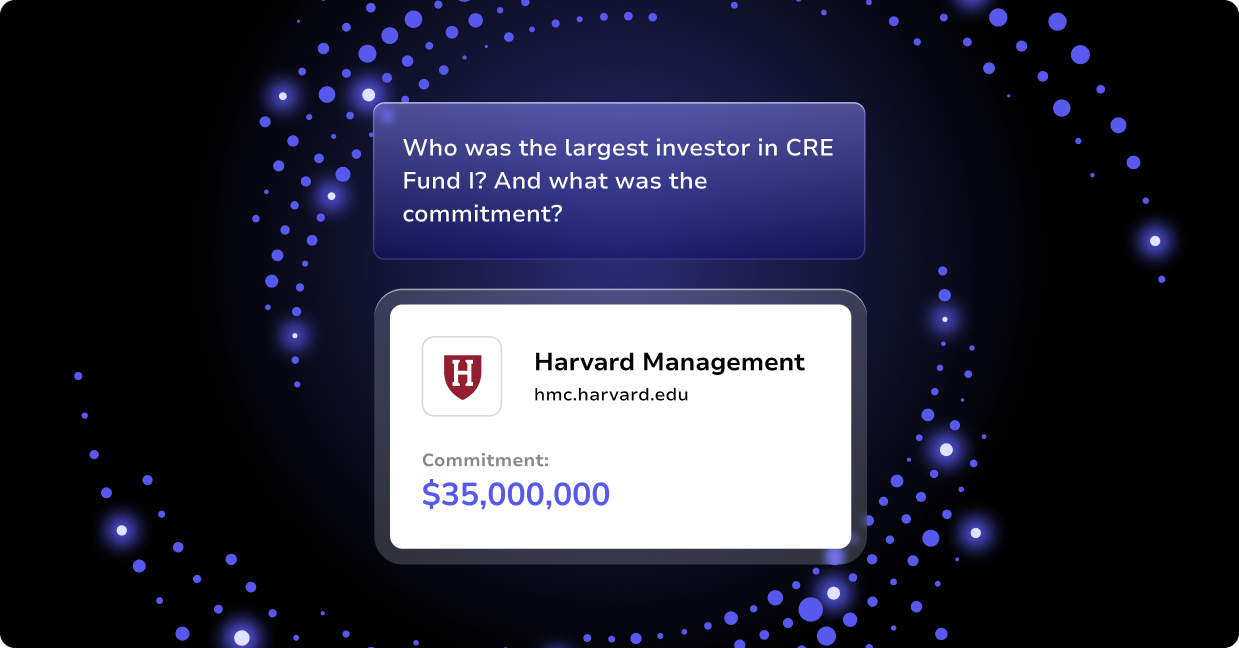
Altvia Connects Private Markets Data to the AI Tools Firms Already Use

FOR IMMEDIATE RELEASE

Altvia Connects Private Markets Data to the AI Tools Firms Already Use

Altvia Integration Platform Adds MCP Support Across Fundraising, Investor Relations, and Deal Sourcing Workflows

DENVER, Colorado, May, 14, 2026–Altvia, the engagement platform for alternative investment firms, today announced MCP support in the Altvia Integration Platform, connecting private markets data to the AI tools GP teams already use.

MCP is the open standard introduced by Anthropic in November 2024 and subsequently adopted by OpenAI, Google DeepMind, and Microsoft. It enables firms to use whichever AI tool their team already trusts and have it work directly against their live Altvia data. Support is now native across Claude, ChatGPT, Microsoft Copilot, Gemini, and other major AI platforms.

“The private markets are rapidly evolving their business models to successfully navigate the alternatives industry transformation,” said Ryan Keough, CEO, Altvia. “Our support for MCP gives teams governed access to their capital raise, investor relations, and deal sourcing data to surface trends, identify opportunities, and make faster, better-informed decisions without leaving their preferred AI tool. This launch is the first of several AI announcements we’ll be making this year as we continue to deepen the intelligence layer Altvia provides for alternative investment firms.”

Designed for Private Markets Workflows

This new addition to the Altvia Integration Platform makes the platform’s core workflows available as standardized MCP capabilities across three domains central to alternative investment operations:

Fund and Portfolio Data: Retrieve fund-level and portfolio-level information in the context of broader AI workflows.

Fundraising and Investor Relations: Query LP contact history, track commitment activity, surface relationship context, and prepare for investor meetings without leaving your  preferred AI tool.

Deal Sourcing: Access pipeline data, deal stage history, and sourcing activity through natural language, enabling faster origination research and deal review.

About Altvia

Altvia is the engagement platform for alternative investment firms. Founded in 2006, Altvia provides General Partner teams with workflow solutions for fundraising, investor relations, deal sourcing, and reporting. Trusted by hundreds of private equity, venture capital, private credit, and real assets firms, Altvia helps teams deepen relationships, move faster, and operate with clarity across the fund lifecycle. Learn more at visit altvia.com.

Media Contact
Annie Eissler
CMO
annie@altvia.com

The Secondary Market Has Come of Age

Private equity has always rewarded patient capital. What it couldn’t always offer was a credible path to liquidity before a fund wound down. That’s changed with GP-led secondaries, continuation vehicles, and structured liquidity solutions which have matured from tactical workarounds into a strategic layer of the alternatives market.

Secondaries make the asset class more functional, more accessible, and more attractive to a broader range of investors. The GPs who understand how to use them will carry a distinct advantage into every fundraise they run.

What Changed, and Why It Matters Now

Secondary market activity has grown into one of the most dynamic segments of private capital, driven by two forces that reinforce each other. 

  1. LP expectations around liquidity have shifted: institutional investors who receive real-time marks and daily attribution across their public portfolios are now making explicit comparisons to the ten-year lockup in a closed-end fund, and directing capital toward GPs who close the gap. 
  2. At the same time, GPs have recognized that offering a credible liquidity path is a fundraising argument in its own right. LPs evaluating a new commitment increasingly factor in anticipated secondary market access alongside track record and investment thesis.

The Two Structures Worth Understanding

Not all secondary market activity looks the same, and the distinctions carry real operational implications.

  • LP-led secondaries are the oldest structure: an existing LP sells their fund interest to a secondary buyer. For GPs, this is largely a passive event, but one that requires operational readiness. Current data rooms, accurate NAV information, and an IR team capable of supporting buyer diligence without disrupting fund operations are table stakes. Firms whose data infrastructure isn’t organized for this kind of scrutiny find out quickly.
  • GP-led secondaries are where most of the structural innovation is happening. These transactions move assets from a fund approaching end-of-life into a new continuation vehicle, giving existing LPs the choice to exit at a fair price or roll their interest forward. Done well, this preserves value and extends the GP’s relationship with high-performing assets. Governance and pricing transparency are non-negotiable here. Conflict of interest concerns are real, and how a GP handles them shapes LP trust well beyond the transaction itself.

The Operational Implication GPs Are Underestimating

Every secondary transaction, regardless of structure, requires a GP to respond to institutional-grade diligence. Buyers want current portfolio data, detailed LP economics, side letter summaries, and clean documentation across the fund’s history. GPs whose records are fragmented across spreadsheets, shared drives, and institutional memory face a painful scramble every time a transaction surfaces.

But the operational burden starts well before a transaction closes. Managing a pipeline of secondary activity introduces its own layer of complexity that most mid-market GPs aren’t systematically tracking: monitoring asset-level exposures and buyer interest across multiple potential transactions simultaneously, managing bid processes with discipline, and maintaining a clear view of how underlying portfolio company exposures shift as secondary transactions progress. Without infrastructure built for this, GPs end up managing high-stakes processes through email threads and disconnected spreadsheets, which creates both operational risk and a credibility problem with sophisticated counterparties who can tell the difference.

This is the operational constraint that catches mid-market GPs off guard. The secondary market’s growth doesn’t just create opportunity, it raises the floor for what organized looks like. LPs who observe a disorganized GP response to a secondary process file that observation away. It shapes how they think about re-up decisions and how they describe the GP to their peers.

The firms building the infrastructure to manage this proactively with centralized LP data, current documentation, clear co-invest records, pipeline tracking with asset-level visibility, and real-time reporting capability are building the operational foundation that makes every LP interaction more credible.

Where This Is Heading

The parallels to public equity market development are instructive here. When block trading and alternative liquidity mechanisms entered institutional equity portfolio management, they didn’t replace the primary market. They made the asset class more functional for institutional capital at scale. Liquidity options reduced the friction of large allocations and opened the door to broader institutional participation.

The same dynamic is playing out in alternatives. Secondary market depth makes the asset class more accessible to a broader set of LPs, including the wealth channel now entering at scale. As vehicle structures and secondary market depth make alternatives more accessible, wealth channel capital is increasingly in play. RIAs, broker-dealers, and wealth platforms serving HNW individuals are actively building allocation infrastructure, per McKinsey’s 2025 asset management research, and liquidity optionality is part of what makes the commitment decision easier. Evergreen structures and interval funds already exploit this. Secondary market liquidity does the same work for closed-end vehicles.

Investment track records will always matter. But the GPs who define the next decade of private capital will be those who build an operational track record to match, one that demonstrates the capacity to serve a broader, more demanding investor base across the full fund lifecycle, including when those investors need a path to liquidity.


This post draws on themes developed in Alvia’s 2026 whitepaper, Massive Alternative Market Shift: Déjà Vu? which examines how the structural transformation of public equity markets previews where alternative investments are heading next. 

What LPs Actually Want From Your Investor Portal (And Why Most Firms Fall Short)

There is a version of an investor portal that most private equity IR teams are familiar with: a password-protected folder where quarterly PDFs live until an LP asks where they are, then you email them directly. It is functional in the same way a fax machine is functional. It works.

LP expectations have shifted structurally, not cyclically. The bar for what constitutes an acceptable investor experience in private markets has been reset, and the firms that understand this are using their portal as a competitive advantage. The firms that do not are quietly losing ground on re-ups and relationship quality without always knowing why.

Here is what the data shows, what LPs say they want, and where most GP portals fall short.

The gap between what GPs deliver and what LPs expect is widening

A Preqin survey found that 73% of LPs cite inconsistent reporting from managers as a significant challenge when investing in alternative assets. That number alone should give IR teams pause. Nearly three out of four limited partners have a meaningful frustration with how their GPs communicate with them and reporting is the primary channel through which that relationship is maintained. 

For more on the importance of reporting see our recent blog on reporting bottlenecks here.

The frustration is not simply about formatting. Sophisticated institutional LPs and increasingly savvy high-net-worth investors now expect continuous reporting and instant access to information. The quarterly PDF delivered 45 days after quarter-end is no longer the standard. It is the floor and for many LPs, it is already below the floor.

According to CSC’s Limited Partners Guide to Fund Operations, 68% of LPs now prioritize operational transparency over even performance track record. That is a remarkable inversion. LPs are telling the market that how you run the relationship matters as much as what you return.

What LPs actually want in a Portal

When you strip away the survey language and talk to IR teams who interact with LPs daily, three things come up consistently.

1. Self-service access to their own data

LPs do not want to email IR to find out their current NAV or distribution history. Many LPs now expect on-demand access to essential data, not just quarterly reports on unrealized value. A portal that requires a support request to answer a basic balance question is not a portal. It is a bottleneck with a login screen.

The self-service expectation extends beyond documents. LPs want to be able to filter by fund, by year, by entity, and see their capital account in real time (or close to it!). A modern investor portal should provide LPs with direct access to real-time or quarter-end fund and portfolio data, historical performance, capital activity, and supporting documentation, all in one place.

2. Dashboard-style reporting, not static documents

LP expectations now highlight a preference for secure digital portals with 24/7 access to information and dashboard-style reporting rather than static documents. This does not mean GPs need to build a Bloomberg terminal. It means LPs want to see their key metrics (IRR, TVPI, DPI, capital called, distributions) in a format they can actually interact with rather than a table buried in a PDF.

LPs want to understand the underlying drivers of performance, assess risk exposures in real time, and gain a deeper understanding of the operational aspects of portfolio companies. A static quarterly report answers none of those questions. A dynamic portal with drill-down capability does.

3. Proactive communication, not reactive delivery

The worst version of an LP portal is one that only activates when the GP remembers to upload something. That’s a document dump with a login screen. What LPs value is always-on access to current information they can pull themselves, on their own schedule, without having to request it from IR.

That shift — from GP-pushed documents to LP-driven self-service — is exactly what a modern portal makes possible. When live fund data, capital account history, and performance metrics are available on demand through a single login, the LP doesn’t need to wait for a quarterly email or chase down a statement. The information is there when they need it. That frees IR teams from fielding basic data requests and lets them focus on the relationship conversations that actually matter.

The fundraising implications are real

LPs are requesting bespoke reporting to meet regulatory or internal requirements, and GPs’ willingness to accommodate these requests varies depending on the operational burden. The firms with a modern portal infrastructure can accommodate these requests more broadly, while the firms without one will be deciding, one LP request at a time, whether the relationship is worth the manual effort.

This is not just an IR operations issue. Your reporting stack is now part of the due diligence process. Prospective investors are looking at how you communicate. They are assessing your operational sophistication. And they are comparing your platform against others they have used.

LP experience during the fund lifecycle directly affects fundraising outcomes on the next raise. A committed LP who feels well-served, well-informed, and genuinely cared for is more likely a re-up than a committed LP who spent two years chasing documents and never felt like a priority.

Diving deeper into the CSC report, not only do 68% of LPs surveyed stated they are focusing on operational transparency, but many LPs believe technology is a major differentiator when looking at competitor GPs. They expect technology that offers real-time data access, integrated systems, automated reporting, and strong cybersecurity.

Technology is now part of the GP selection criteria. Not as a box-checking exercise, but as a genuine signal of whether a firm will be easy or difficult for investors to back.

What separates a portal that works from one that just exists

What’s the difference between an investor portal that strengthens LP relationships and one that simply checks a compliance box? It comes down to three things: the data, the platform and the experience.

  • The data foundation. A portal is only as good as what goes into it. If fund admin data is not connected directly to the portal or if someone is manually uploading an Excel file every quarter then your portal is a document delivery tool, not an investor experience platform. A portal that pulls live data from fund accounting and administration systems ensures what LPs see is always current, but that’s only the beginning of the platform question.
  • The platform play. A portal disconnected from your CRM, VDR, and IR communication tools doesn’t just create extra work; it creates a fragmented experience for both the firm and its LPs. Your team is maintaining the same data in multiple places, and your LPs are logging into multiple systems. When something needs to be updated, it has to be updated everywhere, manually, by someone. A connected platform eliminates that.

    Read more about the advantages of one platform for private capital firms. 

When the CRM, the portal, the VDR, and IR communications run on a single system, data flows where it needs to go without anyone manually moving it. The LP sees a consistent, current picture of their relationship with your firm. Your IR team sees a complete record of every interaction, document, and communication in one place. That is not a technology preference. That is the operational foundation that makes a genuine LP experience possible at scale.

  • The experience. LPs are sophisticated consumers of technology in every other part of their professional and personal lives. A clunky login experience, confusing navigation, or documents organized in a way that makes no intuitive sense will not be tolerated with the same patience it once was. The bar for design and usability has been set by the platforms LPs use everywhere else.

How to know if it’s working.

The clearest measure of a portal’s effectiveness is what happens to inbound LP communication after it goes live. If IR teams are still fielding the same volume of “can you send me my K-1” emails six months after implementation, the portal is not working. A well-designed portal should materially reduce ad hoc requests by making the answer self-evident.

The bottom line

LP expectations around the investor portal are not aspirational. They are current. The firms that invest in building a genuine digital experience for their limited partners, one that gives them real-time access, self-service capability, and proactive communication, are using that investment as a fundraising differentiator. The firms that treat the portal as a document archive are handing their competitors an advantage every quarter.

The question for IR teams is not whether to upgrade the LP experience. It is how much runway you have left before that decision gets made for you.


Altvia’s IR Operations workflow provides a connected LP portal and CRM built directly into the Altvia platform, giving IR teams a single system to manage documents, data access, and investor communications across the full fund lifecycle. To see how it works, request a demo.

5 Themes That Keep Surfacing in Private Capital Operations (And What to Do About Them)

We’re just back from the With Intelligence Women’s Private Equity Summit in Arizona, where more than 1,400 women across private markets spent two days in the kind of frank, practitioner-level conversation that rarely makes it into published reports.

WPES has a way of surfacing what firms are actually grappling with, not just what they’re presenting to LPs. And this year, the operational themes were hard to ignore. The frustrations being voiced in both sessions and hallways track closely with what we hear in conversations with GPs, IR teams, and fund operators across the market. Five of them are worth unpacking.


1. Speed Is the New Competitive Variable in Fundraising

The firms that are closing faster are not necessarily running better strategies. They’re running tighter operations.

Across conversations at WPES and in our broader work with private capital firms, the consistent pressure point is the gap between relationship activity and execution. Meetings happen. Notes get taken. Then the follow-through slows down because moving information from an LP conversation into a structured record, a task, and an investor communication requires manual work at every step.

That friction compounds quickly. In a fundraising environment where LPs are receiving more outreach, evaluating more managers, and consolidating commitments, the speed at which a firm can respond, update, and advance a relationship is a real differentiator.

What firms need is not more effort, it’s automation of the repetitive handoffs: meeting to CRM system, CRM record to follow-up, follow-up to investor communication. The firms building that infrastructure now are shortening their cycles. The ones that haven’t are spending the same time on processes that their competitors are spending on relationships.


2. Most Firms Know What Good LP Communication Looks Like. Fewer Have Built It.

This is the operational challenge that has been acknowledged for years and solved by very few.

GPs know they need to communicate with LPs consistently. They know that transparency and responsiveness are core to re-up decisions. They also know that when multiple people on a team interact with the same LP across different contexts, and none of it is centrally tracked, the quality of that communication degrades fast.

What gets surfaced at events like WPES is not a new problem. It’s the same problem, stated with more urgency. Firms need a complete, accessible view of every LP interaction across the team. They need communication workflows that create structure without creating friction. And they need visibility into where relationships are strong, where they’ve gone quiet, and what needs attention before it becomes a problem.

The firms that have operationalized this are not doing anything heroic. They’re using better systems and more disciplined processes. The gap between them and the firms still managing LP communication in spreadsheets and inboxes is widening.


3. Data Is the Prerequisite. AI Is the Benefit.

AI came up constantly at WPES, and the conversation has matured considerably from where it was a year ago. Nobody is talking about replacing human relationships with automation. The focus is on what AI can do when it’s embedded directly into fundraising and IR workflows: capturing data, surfacing patterns, flagging follow-ups, generating insights from relationship history.

But there was a consistent thread of honesty running through those conversations. AI only works well on good data. Firms that haven’t solved their data capture problem – meeting notes that never make it into a system, interaction history that lives in individual email threads – are not going to get meaningful value from AI tools layered on top of that foundation.

The sequencing matters: data ingestion first, data quality second, AI-powered insights third. Firms that try to skip to the third step are going to be disappointed. Firms that treat data infrastructure as a prerequisite are positioning themselves to extract real value from the AI investments they’re already making.

This is not theoretical. The use cases that are gaining traction right now are narrow and practical: auto-generating account record entries from meeting notes, identifying LPs who are overdue for outreach, combining fund administration data with relationship data to produce more meaningful LP reporting. None of it is complicated. All of it requires clean, connected data to work.


4. AI Adoption Is Still Experimental, and That Window Is Closing

The honest read on AI in private markets right now: most firms are in the experimentation phase. Pilots are running. Use cases are being tested. Measurable impact is still limited.

That is not a criticism. It reflects where the industry genuinely is. But the firms that treat experimentation as a permanent state are going to fall behind the ones that are building toward adoption at scale.

What separates those two paths is change management. Technology does not change behavior on its own. If an AI tool requires a new workflow and nobody is accountable for driving adoption of that workflow, the tool will be used by the three people who were already interested and ignored by everyone else.

The firms making real progress on AI are treating adoption as an operational problem, not a technology problem. They are defining what behavior change looks like, measuring it, and holding teams accountable for it.


5. Raises Are Continuous. Most Operations Aren’t Built That Way.

The session that resonated most at WPES reinforced something that shows up in our own data and client conversations: the strongest fundraising firms are not raising episodically. They are managing LP relationships with the same discipline between closes as they apply during an active raise.

LPs said it plainly. They want proactive engagement, not just inbound responses when a fund is in market. They want to know what is happening in the portfolio, what has changed in the team or strategy, and that their GP is thinking about them specifically, not sending the same update to a distribution list of 200.

The operational implication is significant. Building and maintaining that kind of continuous relationship management requires infrastructure. It requires a system that tracks every interaction, surfaces the right follow-ups, and enables a small IR team to sustain meaningful engagement across a large LP base without losing quality.

That is what purpose-built private capital platforms are designed to do. And it is what general-purpose CRMs adapted for private markets consistently fail to deliver.


The Pattern Across All Five

Look at the five themes above and a single thread runs through all of them: the work is operational. Speeding up the fundraising cycle, maintaining consistent LP communication, building a data foundation that makes AI useful, driving adoption rather than just deployment, sustaining relationship engagement between closes – none of it happens without operational infrastructure behind it.

That shift is creating a new kind of competitive differentiation in private markets. Firms with disciplined IR operations are responding to LPs faster, communicating more consistently, and entering each raise better prepared. The advantage compounds because the infrastructure carries forward across funds.

Altvia is built for exactly this layer of the business. Connecting fundraising workflows, LP communication, analytics, and reporting into a single platform gives IR teams the visibility and workflow structure to operate with that kind of consistency, not just during a raise, but every day leading up to it.

Stop Buying Tools. Start Designing Outcomes.

For years, inside private equity firms, technology decisions have followed the same pattern. We identify a pain point and buy a tool to solve it. We need a CRM to manage fundraising relationships. We need a portal to distribute reporting. We need a VDR for diligence. Then we layer in analytics tools and workflow add-ons to fill the gaps.

Each decision makes sense in isolation, and while each tool solves something real, over time, something subtle happens. We accumulate systems instead of building an operating model.

It doesn’t break all at once. The friction shows up gradually. A reporting request requires three exports and a spreadsheet merge. Diligence lives outside the relationship history. Investor communications are technically “tracked,” but not truly contextualized. As new funds launch and strategies expand, the complexity compounds. Every initiative requires stitching systems together. Every handoff introduces manual work, latency, and risk.

At some point, the realization sets in: this isn’t a software problem. It’s a workflow problem.

What Changes When You Start With Outcomes

The shift happens when you stop asking, “What tool do we need?” and start asking, “What outcome are we trying to drive?”

In fundraising, the goal isn’t CRM adoption. The goal is shorter cycles, predictable pipeline visibility, coordinated execution, and a diligence experience that builds LP confidence. When you map the full workflow — sourcing, qualification, meetings, follow-ups, diligence, close — it becomes obvious how fragmented tools create operational drag. Relationship notes sit in one system. Engagement data lives in another. Diligence materials sit somewhere else. Reporting requires reconciliation. No single place reflects the full LP story.

When you think in workflows, the question changes: does every interaction, document, and data point contribute to one connected system of record? If not, we are building friction into the process.

Investor relations is no different. The objective isn’t to “have a portal.” It’s to deliver consistent, professional, compliant communication at scale. When reporting, documents, engagement tracking, and relationship intelligence are separated, you don’t actually know how LPs are experiencing your firm. You can distribute materials efficiently, but you lack context. A workflow-first approach connects reporting, communications, and relationship history so IR teams can operate with clarity instead of coordination overhead.

Deal sourcing makes the fragmentation even more visible. The objective isn’t better CRM usage. It’s building a durable proprietary pipeline, analyzing channel performance across bankers and proprietary introductions, and institutionalizing relationship capital across the firm. When deal and fundraising data sit in disconnected environments, insight fragments. LP introductions aren’t tied to broader relationship context. Attribution becomes fuzzy and institutional memory weakens.

When workflows are unified, relationship data stops being departmental. It becomes institutional.

The Strategic Implications

This isn’t just operational hygiene. It’s strategic infrastructure.

When firms think in tools, data lives in silos. Each fund feels like a partial reset. Insights degrade over time. AI becomes a layer of automation on top of fragmented inputs.

When firms think in workflows, data compounds. Historical relationships, engagement patterns, and performance metrics build on one another. Intelligence has context. AI becomes meaningful because it operates across connected workflows, not isolated records.

Execution scales more predictably. New team members ramp faster because processes are embedded. Compliance is part of the workflow, not something retrofitted during audits.

And LP experience improves by design. Consistency, responsiveness, and transparency are no longer initiatives. They are structural outcomes. In a market where LPs are evaluating operational maturity alongside performance, that distinction matters.

Why This Matters Now

Private markets are more competitive and more operationally complex than they were even five years ago. Firms are managing multiple funds, parallel strategies, co-invest vehicles, and tighter regulatory expectations. LPs expect transparency and responsiveness. Leadership teams expect real-time visibility and reliable reporting.

A collection of tools can support activity. But only an integrated workflow can support institutional excellence.

When firms continue to think in categories—CRM, portal, VDR—they optimize locally. When they think in workflows—fundraising, IR operations, deal sourcing—they optimize systemically.

That shift changes buying criteria. It changes implementation priorities. It changes how leadership evaluates technology investment. More importantly, it changes how the firm operates.

The firms that will outperform won’t necessarily be the ones with the most software tools. They’ll be the ones that design their operating systems around how private capital actually works—across the full lifecycle of raising, deploying, and managing capital.

Technology doesn’t drive that shift. Mindset does. And once the mindset changes, the right technology decisions become much clearer.

LP Relationships are Built in the Quiet Periods Between Raises

“The best time to raise your next fund is the day after you close your last—so you’re in perpetual fundraising motion.”

Many firms treat fundraising as a mode they enter and exit. Communication intensifies when the fund is officially in-market, meetings multiply, and materials get polished. By the time a firm formally launches its raise, most LPs carry a quiet, but strong, bias toward or away from a re-up.

This creates the core tension in how most IR teams operate: their energy concentrates at exactly the moment the outcome is already largely determined.

What LPs Are Actually Evaluating

Institutional LPs do not evaluate managers quarter by quarter. They build a confidence profile over years, shaped by an accumulation of interactions that individually feel minor but collectively form a durable impression. Every quarterly report that arrives with inconsistent numbers, every LP question that takes four days to answer, every material issue disclosed reactively rather than proactively—these interactions update that profile continuously, regardless of whether a fund is in market.

LPs look beyond numbers; they evaluate how a firm listens, captures context, and coordinates responses. According to CSC’s research across 150 LPs in North America, Europe, and Asia Pacific, 85% had rejected an investment opportunity over operational concerns alone, and 68% now rank operational clarity above historical returns when evaluating a manager. 

The implication is important: your IR function is being assessed continuously, and the assessment is as much about what you say than about how reliably your operating model delivers on it.

The Problem With Managing Relationships in Inboxes

During Altvia’s February 2026 fundraising webinar, Matt Curtolo, GP/LP Advisor, MC Advisory, made the operational challenge concrete: “If you think about Dunbar’s number, you can have 150 relationships that your brain can really handle, and above that you start to lose context. Most IR systems should have multiples of that, and you need detailed notes about those folks.”

A mature firm is managing hundreds of LP relationships, each with distinct preferences about communication cadence and what they need to see before committing. Managing that at scale in spreadsheets and email inboxes works until it stops working, and it stops working quietly—through context that degrades, follow-ups that lag, and preferences that get lost between interactions, or worse, loudly when the wrong document is sent to the wrong person.

During the webinar, Jeff Willems, COO, Triton Lake described the operational discipline required to solve this: his team captures granular data on every LP’s investment preferences, tracks where each relationship sits in the engagement cycle, and uses workflows that prompt the team to follow up when the right trigger is reached. Some LPs want frequent engagement and are comfortable being chased. Others have indicated they prefer to receive deal flow and will reach out when something is relevant. Both preferences need to be honored systematically, not just by the person who originally captured them. When that person leaves or shifts roles, that context should not leave with them.

This is precisely what Altvia is built for. Engagement tracking at the document level, combined with workflow automation for 24- and 48-hour response standards, means the firm’s behavior toward LPs is consistent and professional regardless of which individual is handling the interaction.

The Cost of Inconsistency

LPs do not all react the same way to operational friction, and that is part of what makes it so difficult to manage. Some will flag an error immediately and forcefully—a single number that does not reconcile in a quarterly report can generate a call within the hour, with little patience for explanation. Others absorb the friction quietly and say nothing. With that second group, the signal shows up later and indirectly: slower internal approvals, more diligence questions than expected, reference requests that feel excessive, commitments that arrive smaller or later than anticipated. The vocal LP at least tells you where you stand. The quiet one has already started forming a view about your next fund, and you will not find out until you are in market.

Disconnected systems—a CRM that does not talk to fund administration, reporting that lives in a spreadsheet no one can verify is current, LP communications that go out of one team member’s inbox without being logged anywhere—create the conditions for that erosion at scale.

Altvia’s connected intelligence approach addresses this directly. A single source of truth across IR and deal teams means LP responses draw from the same data regardless of who delivers them. Automated reporting eliminates the version-control problem that produces inconsistent numbers. And the LP Portal gives investors a consistent, branded, audit-ready experience of the firm that reinforces professionalism at every touchpoint.

Why the Off-Cycle Period Is the Fundraise

Firms that operationalize LP relationship management see a different dynamic when they return to market. Conversations start warmer because the LP has been consistently served in the interim. Diligence compresses because the operational track record is self-evident. Reference calls reinforce the relationship rather than having to rescue it, because existing LPs can speak to the quality of the off-cycle experience and not just the deal returns.

In a market where average fund close times have stretched to over 20 months and capital is concentrated with fewer, more trusted managers, the off-cycle period is not the gap between fundraises. It is the fundraise. The firms that recognize this—and build the systems to execute on it continuously—are the ones LPs move fastest for when the time comes.

Co-Invest Readiness Is the New IR Differentiator

Co-invest demand has never been higher. According to a StepStone survey covering 145 GPs and 420 funds, co-investment volume has risen approximately 30% since before the pandemic, and the demand continues to outstrip supply —only half of LPs with an appetite for co-investment have been able to participate. Many firms interpret this surge as validation of their deal quality. That is only partially true.

What the data reveals is a supply-side driver that complicates the narrative: facing one of the toughest fundraising environments in decades with:

  • Global buyout funds raising 23% less capital in 2023 than the prior year
  • Over a third of funds taking two or more years to close

GPs are increasingly offering co-investment as a tool to retain LP capital in a highly competitive environment (Chronograph, 2025). In other words, co-invest is simultaneously a relationship signal and a capital necessity. GPs who treat it purely as proof of deal quality are missing half the picture.

The half they’re missing is this: increasingly, LPs are making co-invest allocation decisions based on something less visible and far more decisive than the deal itself—how easy the GP is to work with when speed matters.

Co-invest execution can be a real-time audit of your firm’s IR operating model.

What LPs Quietly Notice

When a co-invest opportunity lands, LP timelines compress dramatically. Co-investment requires a robust internal diligence process and rapid decision-making capabilities from LPs,  which means their internal capital committees are moving fast, and the friction they encounter on the GP side gets noticed immediately. While some LPs have fast-track processes for co-investments with trusted managers, decision cycles typically include an initial screen, manager meetings, investment committee memos, legal review, and subscription execution—all of which must be fed with accurate, clean data from the GP in compressed time.

In that environment, small operational frictions stand out. Materials that arrive in inconsistent formats. Data that requires follow-up clarification before the LP can build their IC memo. Allocation processes that feel opaque or ad hoc. Responses that lag behind competing managers offering the same opportunity.

Rarely will an LP say this explicitly. But patterns form. Over time, some managers become known as “easy to partner with.” Others develop a reputation for friction. That reputation compounds across fund cycles.

The Misdiagnosis Most Firms Make

When co-invest allocations fall short of expectations, the default diagnosis is deal attractiveness. The actual constraint is usually process confidence. And the data increasingly supports this.

CSC’s research across 150 LPs in North America, Europe, and Asia Pacific found that 85% had rejected an investment opportunity over operational concerns alone, and 68% now rank operational clarity above historical returns when evaluating a manager. That is a remarkable finding and most GPs have not fully internalized what it means for their co-invest programs specifically. When an LP is evaluating whether to write a direct check into a deal on a compressed timeline, operational confidence in the GP becomes a proxy for confidence in the investment itself. If the information is incomplete, delayed, or inconsistent, the allocation size shrinks or the LP passes.

The Concentration Dynamic Raising the Stakes

This execution gap matters more than it did five years ago because of where LP capital is concentrating. In 2024, the top 10 funds in capital raised captured 36% of the total, and 98% of capital went to experienced fund managers (Bain & Co, 2025). LPs are consolidating their manager rosters, doing deeper diligence on fewer relationships, and demanding more from the managers they keep. Co-invest rights have become a standard negotiating point in this environment, not a premium benefit. GPs now routinely offer co-investment opportunities to attract capital in competitive markets, meaning the co-invest itself is table stakes, and the execution around it is what differentiates.

As Jeff Willems, COO, Triton Lake noted in Altvia’s February 2026 fundraising webinar, LPs are no longer passive capital providers waiting for returns at the end of a fund cycle, they are demanding more hands-on relationships, with co-investment alongside trusted managers becoming a primary mechanism for deepening those relationships over time. The firms that get disproportionate co-invest allocation are, increasingly, the ones making that partnership frictionless.

Operational Signals That Build Confidence

Top-performing IR teams treat co-invest readiness as an always-on capability, not a scramble triggered when a deal appears. The distinction matters because co-invest materials cannot be assembled from scratch under a 72-hour timeline without introducing errors, inconsistencies, or delays that erode LP confidence at precisely the moment it matters most.

What that operational readiness looks like in practice: standardized data structures that produce consistent formatting without manual reconciliation, clear ownership protocols between the deal team and IR so information does not fall into a handoff gap, and a single source of truth that allows any team member to pull accurate fund exposure, portfolio company data, and deal economics without chasing multiple systems.

PwC’s analysis of leading PE firms in 2025 found that those firms embedding operational excellence into their investor relations model—including automated workflows and real-time portfolio insights—are gaining a durable fundraising advantage over peers who have not made those investments. The firms winning the most institutional co-invest capital are running themselves with the same operational rigor they demand of their portfolio companies.

Why This Matters Beyond the Deal

Every co-invest interaction feeds forward into the next fund raise. It is not a discrete event, it’s a data point in an ongoing LP assessment of the GP’s operational maturity. LPs remember who was easy to work with, who delivered clean information the first time, and who created unnecessary back-and-forth that compressed their own internal timelines.

For LPs with the resources and expertise to navigate complex deals, the most compelling positions come from pre-signing co-investment opportunities, where StepStone data shows an average gross TVPI of 2.7x—outpacing post-signing deals, which average 2.2x (Chronograph, 2025). The GPs who get their trusted LPs into those pre-signing positions are the ones with whom the LP already has a high-trust, high-efficiency operational relationship. That relationship is built over years of frictionless interaction including, critically, previous co-invest execution that went smoothly.

This is Raise Every Day in practice. Co-invest is not merely incremental capital. It is one of the fastest accelerators of institutional trust.

The Strategic Implication

In a market where co-investment opportunities are growing rapidly deal quality is increasingly table stakes. What differentiates is operational execution. The firms winning disproportionate co-invest allocations are not always the ones with the most attractive deals. They are the ones LPs trust to move fast without introducing risk into the LP’s own internal process.

Managing co-investment complexity with tools not designed for the task introduces an unacceptable level of risk. The firms that recognize this and build the operational infrastructure to match their co-invest ambitions will compound LP trust across every fund cycle. The ones that continue treating co-invest execution as an afterthought will find that allocation decisions are quietly, and permanently, going elsewhere.

Why Your Reporting Bottlenecks Are Self-Inflicted—and How to Fix Them

Quarter-end arrives. Data flows in from multiple sources. Spreadsheet versions multiply. Someone finds a discrepancy at 11:47 PM, and what should have been a routine process becomes a fire drill.

Most firms treat this as an unavoidable cost of doing business. It isn’t. Reporting bottlenecks are rarely caused by complexity alone. They are caused by disconnected workflows—and in today’s fundraising environment, that distinction matters because one is a market condition and the other is an architectural choice.

Time pressure doesn’t create the problem. It exposes it.

When reporting depends on manual data pulls, email coordination, and spreadsheet reconciliation across systems that don’t communicate, you don’t have a reporting process. You have a patchwork. Under calm conditions, patchwork holds. Under pressure, it breaks—and the consequences show up externally: late LP follow-ups, inconsistent figures across materials, and an over-reliance on the one or two team members who know where everything lives.

LPs notice this, not through explicit feedback, but through friction. A follow-up that takes days instead of hours. A number that requires clarification before it can be trusted. A diligence request that triggers visible internal scrambling. In a competitive raise, speed signals competence. Manual bottlenecks quietly dilute that signal.

The hidden cost of heroics

Many firms pride themselves on making it work; the IR lead who stays late to fix a reporting error, the analyst who manually realigns three data sources before a board meeting. Heroics feel productive. But they mask structural fragility and prevent scale. What worked at Fund II becomes untenable at Fund IV, when structures are more complex, LP rosters are larger, and the margin for operational inconsistency is smaller.

The firms that avoid this pattern invest in connected infrastructure before they feel the pain, not after. When LP data, deal data, and performance reporting operate from a single integrated source, reports populate from validated data automatically, version conflicts disappear, compliance trails are built into daily workflows rather than assembled retroactively, and IR teams spend their time advancing relationships rather than reconciling numbers.

That shift isn’t just operational efficiency. It is a fundraising advantage. When reporting bottlenecks disappear, LP updates go out consistently, diligence requests are fulfilled quickly, and the firm enters every LP interaction with credibility already intact.

That is what Altvia is built to enable. We help private capital firms replace manual reporting friction with connected, automated workflows designed to scale alongside the firm—so that operational excellence stops being something you heroically maintain and starts being something your systems quietly guarantee.

The most dangerous bottlenecks are the ones you’ve normalized. The most powerful accelerators are the systems that make operational excellence invisible.

Why Manual Reporting Is Holding Back Your Next Raise

Performance still matters most in fundraising. Strong returns earn attention, secure first meetings, and open allocation discussions. But once a firm is in consideration, momentum is shaped by something more subtle: how easy it is for LPs to underwrite the opportunity.

That is where friction enters the picture.

One of the most common and underestimated sources of fundraising friction is manual reporting.

Spreadsheets passed between teams. Decks updated in parallel. Data pulled from multiple systems and reconciled hours before a meeting. Follow-up questions answered by combing through inbox threads and historical files.

Individually, these processes feel manageable. Collectively, they introduce small delays, inconsistencies, and moments of uncertainty. In a competitive fundraising environment, those moments accumulate.

Manual reporting does not replace performance as a decision driver. It shapes the pace and confidence with which decisions are made.

Manual Reporting Is More Than an Efficiency Problem

When reporting is manual, three things happen simultaneously:

  1. Time is diverted from relationship-building to data assembly.
  2. Inconsistencies creep in across materials.
  3. Responsiveness becomes unpredictable.

When reporting relies heavily on manual workflows, the impact extends beyond internal productivity.

Time that could be spent deepening LP relationships is diverted toward assembling numbers. Data inconsistencies emerge as materials are updated in different places. Responsiveness becomes dependent on who has access to which file and how quickly it can be reconciled.

LPs rarely call this out directly. Instead, it surfaces through patterns. A follow-up question that takes longer than expected to answer. A metric that appears slightly different than in a prior presentation. A data room document that does not perfectly align with the most recent deck.

Each instance is small. None are fatal. But together, they create hesitation.

Hesitation lengthens diligence. Lengthened diligence affects internal LP committee timelines. Slower internal approvals can reduce commitment size or shift allocation sequencing.

Over time, what began as a reporting workflow becomes a fundraising constraint.

LP Expectations Have Changed

Institutional LPs are more sophisticated than ever. Their internal processes are tighter. Their scrutiny is deeper. Their allocation committees are comparing managers side by side.

They expect:

  • Clean, consistent performance data
  • Clear segmentation of exposure and pipeline
  • Immediate access to historical reporting
  • Transparent audit trails
  • Fast turnaround on ad hoc requests

When firms rely on disconnected systems and spreadsheet workflows, meeting those expectations requires heroic effort. And heroics do not scale.

The Confidence Multiplier: Automation + Connected Data

Automation alone is not the solution. Nor is simply moving spreadsheets into a new interface.

The real shift happens when LP data, pipeline data, and performance data are connected in a unified system.

When reporting workflows are automated and built on a single source of truth:

  • Data populates consistently across decks, portals, and reports
  • Version control issues disappear
  • LP segmentation is dynamic rather than static
  • Response time to investor requests compresses significantly

Instead of reconciling discrepancies, conversations move directly to portfolio strategy and forward outlook. Instead of allocating time to assembling numbers, IR teams invest more time advancing relationships. Speed increases without compromising accuracy, and responsiveness becomes repeatable rather than reactive.

The result is not just operational efficiency. It is a measurable shift in how LPs experience the firm.

Faster LP Interactions Drive Fundraising Momentum

Fundraising is not just about capital availability. It is about momentum.

Momentum builds when:

  • LP follow-ups are answered quickly and cleanly
  • Materials reinforce rather than contradict prior communications
  • Data confidence reduces the need for repeated verification
  • Reference calls confirm operational discipline

Automation and connected systems accelerate each of these interactions.

In competitive processes, that acceleration matters. LPs notice who makes it easy to underwrite. They remember who is responsive under pressure. They favor managers who reduce internal friction.

The difference is subtle but compounding.

The Hidden Cost of “It Works for Now”

Many firms postpone modernization because manual reporting still functions adequately at their current scale. The spreadsheets balance. The decks go out on time. The raise eventually closes.

The more important question is whether those processes will hold under increased complexity.

As firms expand into continuation vehicles, co-invest structures, or multi-product platforms, reporting requirements multiply. Investor segmentation becomes more nuanced. Portfolio data becomes more layered. Regulatory scrutiny intensifies.

Workflows that felt manageable at Fund II often become strained by Fund IV. By the time the strain becomes visible externally, the internal opportunity cost has already accumulated in slower responses, extended diligence cycles, and heavier operational lift.

Raise Every Day Means Automate Before You Need To

High-performing IR teams do not wait for fundraising friction to force modernization.

They invest in:

  • Automated reporting workflows
  • Connected LP and pipeline data
  • Centralized CRM foundations
  • Real-time visibility into investor engagement

They understand that performance attracts capital, but operational clarity accelerates it.

When reporting is seamless and consistent, LP diligence moves more efficiently. When diligence moves efficiently, internal approvals progress with fewer delays. Over time, that compounding effect shapes not only how quickly capital closes, but how confidently LPs prioritize the relationship.

In today’s market, credibility is built in the details. And the systems behind those details often determine how much momentum a firm can sustain once performance has earned its place at the table.

Operational Discipline: The Hidden Differentiator in Today’s Tight Fundraising Market

Strong returns may open the door, but operational discipline determines how quickly LPs walk through it.

Fundraising conditions have shifted meaningfully over the past two years. Bain & Company’s Global Private Equity Report 2026 notes continued pressure on distributions and a record backlog of unrealized assets, contributing to slower capital recycling and tighter allocation pacing. At the same time, fundraising totals have moderated from peak years, and LPs are concentrating commitments among fewer managers.

In this environment, performance alone is rarely sufficient to drive fast re-ups. LPs are evaluating not only track record, but the operational infrastructure behind it. Institutional maturity has become a proxy for risk management.

Operational excellence, once considered back-office hygiene, now directly influences allocation velocity.


The Structural Shift in LP Evaluation

Private markets have grown more complex. Multi-strategy platforms, continuation vehicles, co-investment programs, private credit sleeves, and cross-border structures have expanded the operational surface area of firms. That complexity increases the importance of governance and reporting consistency.

ILPA’s Private Equity Principles and its updated reporting templates emphasize standardized reporting, transparency, and governance practices as industry best practices. These frameworks reflect rising LP expectations around auditability and comparability across managers.

At the same time, Coller Capital’s Global Private Capital Barometer has documented evolving LP sentiment, including greater caution around performance consistency and a heightened focus on risk mitigation in portfolio construction decisions. As performance dispersion narrows and public market comparisons intensify, differentiation increasingly depends on more than headline returns.

Taken together, these signals point to a deeper shift. LPs are underwriting operating models alongside investment theses.

They are assessing whether a firm’s systems, controls, and cross-functional alignment can support scale without introducing operational risk.


Where Operational Gaps Surface

Most firms do not view themselves as operationally fragile. The gaps often reveal themselves only under pressure, particularly during active fundraising or deep diligence.

They tend to surface in patterns rather than events. Numbers that require reconciliation across decks and portals. Investor segmentation that changes depending on who is exporting the data. LP requests that require manual aggregation from multiple systems. Reporting workflows that depend heavily on spreadsheet logic known to only a few individuals.

None of these issues, on their own, derail a fundraise. But together they introduce friction. And friction affects timing.

In a capital-constrained environment, timing matters. When LPs are consolidating commitments among core relationships, extended diligence cycles or slower responses can shift internal priority. Operational inconsistency does not always produce explicit concern; more often, it simply slows momentum.


What Operational Discipline Signals

When LPs encounter a firm with standardized, scalable systems, several inferences follow naturally.

First, the firm appears institutionally ready. Additional capital can be absorbed without destabilizing process.

Second, governance maturity is visible. Data is consistent across materials, traceable through workflows, and defensible in committee discussions.

Third, non-investment risk appears lower. Strong operational controls suggest fewer surprises beyond portfolio performance.

For mid-market firms moving toward institutional scale, these signals are especially consequential. LPs want confidence that infrastructure is evolving at the same pace as strategy and AUM growth.

Operational clarity reduces cognitive load for allocators. That reduction in friction often translates into faster conviction.


Operational Infrastructure as a Fundraising Lever

Operational discipline is frequently framed as internal efficiency. In practice, it functions as an external confidence engine. But only when the underlying systems are connected.

Fragmented infrastructure creates invisible friction even when individual tools are performing well. A CRM that doesn’t communicate with the LP portal, a reporting workflow that requires manual reconciliation before each investor update, a data room that exists outside the firm’s core system of record: each of these represents a seam. LPs don’t see the tools. They see the outputs—response time, reporting consistency, narrative alignment across materials. When those outputs are uneven, the operational model behind them comes into question.

Integrated infrastructure changes what’s possible. When investor data lives in a single connected system, portfolio metrics reconcile automatically across decks, portals, and data rooms rather than requiring a reconciliation sprint before every LP touchpoint. Structured communication workflows that draw from shared data create consistent investor experiences across team members, fund vehicles, and time. Audit-friendly documentation emerges as a natural byproduct of how the firm operates rather than as a separate compliance exercise.

The integration itself is the signal. When an LP asks a question during diligence and the IR team, finance team, and deal team all produce the same answer from the same source, that alignment is evidence of an operating model that can absorb scale without introducing risk.

These systems do more than streamline internal work. They shift diligence conversations away from verification and toward forward strategy. When LPs spend less time validating numbers, they spend more time evaluating opportunity. When reporting is consistent across quarters and vehicles, reference checks reinforce credibility rather than surface discrepancies. When co-investment processes are organized and responsive because they’re embedded in the same system driving day-to-day IR operations, the experience compounds over time.

Integrated operational discipline, like performance, compounds.


Raise Every Day Means Operate Every Day

Firms that approach fundraising episodically often attempt to retrofit discipline when a new vehicle launches. High-performing firms embed readiness into daily operations. They align IR, finance, and deal teams around shared data foundations well before entering the market. They treat reporting consistency and governance not as compliance exercises, but as strategic assets.

In a market characterized by selective capital and heightened scrutiny, operational excellence is no longer a marginal advantage. It shapes allocation speed and commitment size.

The practical question for any firm is straightforward: if an LP initiated deep diligence tomorrow, would your systems accelerate confidence or introduce friction?

Altvia’s Fundraising Readiness Checklist outlines the structural components of scalable, compliant, investor-ready infrastructure and can help firms evaluate that question objectively.

In a tighter fundraising cycle, operational discipline is not merely about efficiency. It is about earning the credibility required to scale.