



Category: Private Equity Technology

How Business Intelligence Tools Can Minimize Requests from LPs

80% of the world’s data is unstructured, posing a challenge for data-driven fund managers to understand the market environment and make informed decisions. According to Preqin, private equity buyouts in 2018 reached a high of 5,106 deals globally, with an aggregate value of $456 billion.

More deals create more frequent performance report requests with increased complexity for IR teams. According to eVestment’s 2018 Private Markets Due Diligence Survey, nearly 4/5 fund managers have experienced increasingly granular performance data requests from investors when compared to their previous fundraise.

Business Intelligence at the Core of Your Operational Toolkit

Traditional firms rely on static reports, listing previous stats and providing a performance update. Business Intelligence (BI) integrates with multiple sources of real-time data in a cloud-based environment. BI lets you discover and explore data relationships you didn’t know existed and create new connections to drive growth. Leveraging large amounts of data is one of the greatest untapped sources of additional insight into deals and profit.

According to EY Capital Insights most recent Global Corporate Divestment Study: “46% of PE executives say that availability of sufficient granular data was the most important factor in staying in an acquisition process. 44% indicate that a lack of confidence in information is the most significant factor that causes a PE firm to reduce its offer or walk away from a deal. The survey also found that 49% believe access to meaningful data is the biggest portfolio review challenge.”

Interactive dashboards allow firms to more effectively provide instant access to all key stakeholders, increase transparency, and provide accountability.

Business Intelligence Tools decrease human hours of data collection, entry, analysis, control, and use. Instead, your human capital can be put to better use to discover insights into valuable business growth strategies.

Visualized data analytics allows users to better absorb information and discover new opportunities. It enables LPs to review your track record, have a more transparent view of the data, and eliminate the need for back and forth with your IR team. Allow decision-makers to review the data and gain their own insights from performance.

Make an Impact on Market Opportunities

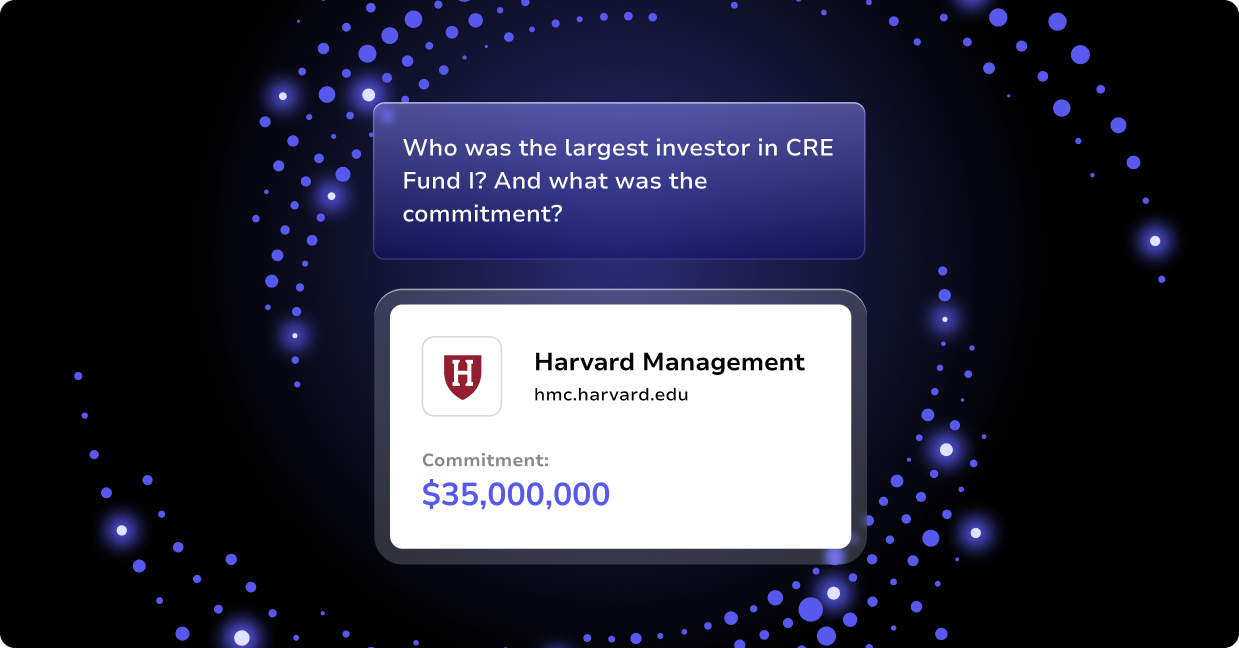
An end-to-end, private equity business intelligence solution that connects to, transforms, normalizes, and displays all of your data across systems, Altvia Answers makes it easy to perform complex analysis for any request.

Altvia Answers provides data insights, answering the questions you know you have, along with the questions you haven’t yet discovered.
How to Improve Satisfaction With Investor Relations Software

Using an investor relations software to support LP relationships is a challenge experienced by almost all private equity firms right now. This point is illustrated in the Ernst and Young Annual Global Private Equity Survey.

The other day, I was on a call with a firm that invests in the management companies of large, premier GPs and helps them to address strategic operational priorities. They had downloaded our Investor Experience guide because, in their words, “The bulk of what we hear about from our GPs is how much they’re struggling with the ability to properly service their LPs and how they’d like help understanding what technology is out there to improve that.”

Technology transformation and improved investor reporting are still top-priority items for CFOs and the value of technology and its role in investor relationships is more widely recognized each year.

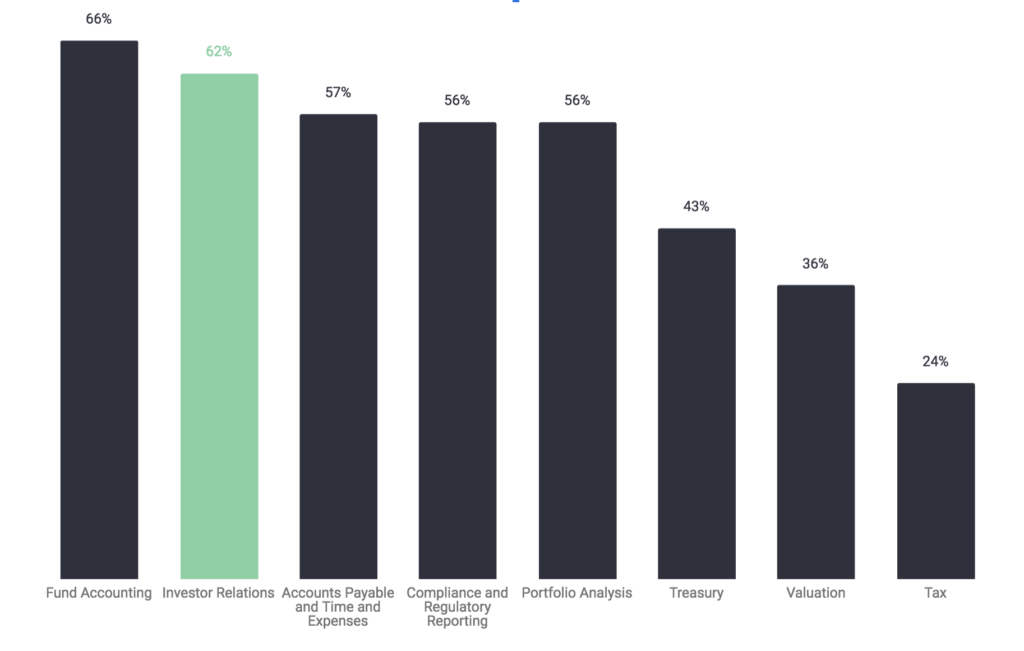
What are your top priorities for an investor relations software?

Source: EY Global Private Equity Survey

Many firms understand that technology investment can improve margins. And it seems that firms are adopting technology to manage fund accounting and investor relations.

Which of the following actions have you taken to mitigate margin erosion of your management company?

Source: EY Global Private Equity Survey

In fact, much of the technology innovation is being realized in the investor reporting side of the business. According to the survey results, private equity managers continue to focus on enhancing the investor experience with better reporting through portals that improve the level of access to information.

In which areas did you make investments in investor relations software in the past three years?

Source: EY Global Private Equity Survey

How do you share your portfolio information with clients?

Additionally, respondents to the EY survey report that they will “use business intelligence and application programming interfaces (APIs) and data feeds to provide information to clients in the coming years, even if they are not using these tools today. “

And respondents believe that “leveraging these new solutions will be paramount to support investor satisfaction in accessing timely information via a format that meets their preference.”

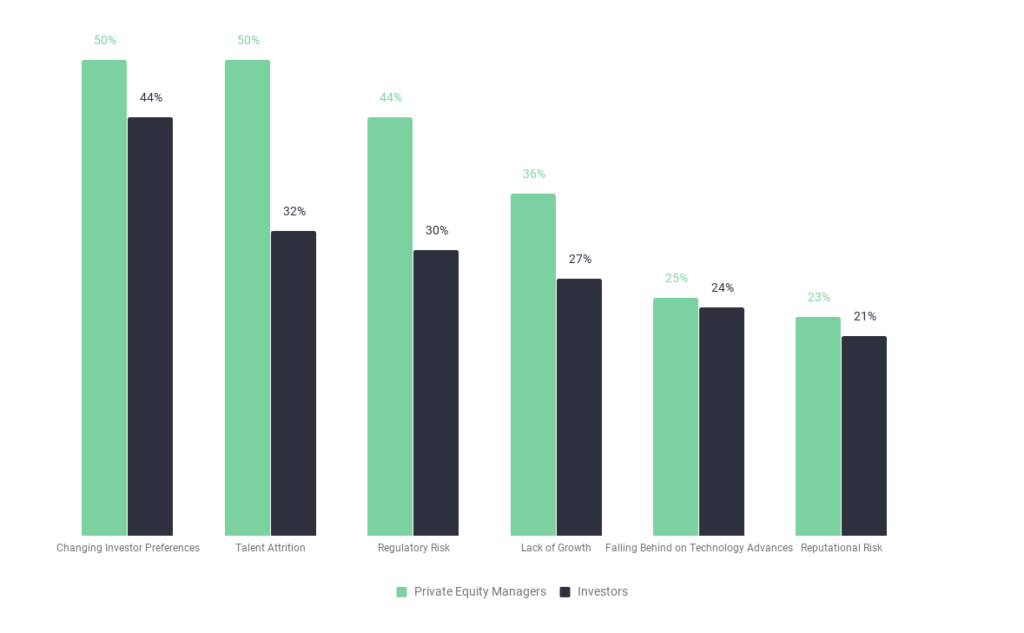
Private equity CFOs recognize the importance of investor satisfaction, as 20 percent more CFOs recognized changing investor preferences as a top risk facing the industry. As a result, changing investor preferences now ranks as a top-rated risk along with talent attrition.

What are the most critical risks affecting the private equity industry over the next five years?

Source: EY Global Private Equity Survey

However, firms report that they haven’t yet seen a return from technology investments.

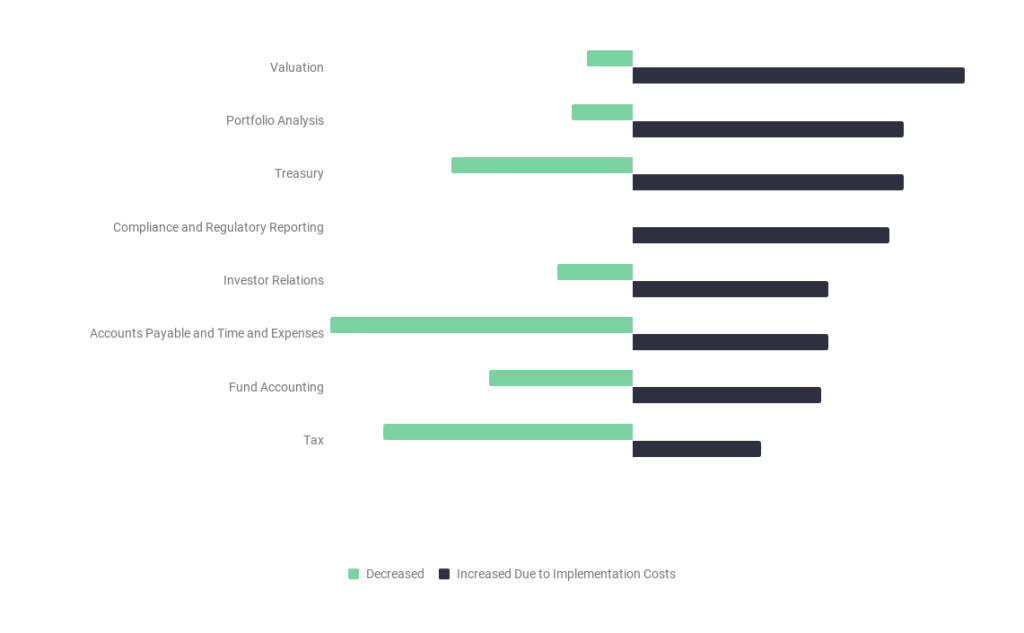
What is the overall impact to date of technology investments on operating expenses?

Source: EY Global Private Equity Survey

This is where the opportunity exists.

The industry agrees—technology is a powerful tool to improve the investor experience. And, providing excellent investor management and reporting is critical to a firm’s success. But there are real challenges to implementing systems and managing change in order to get full value out of the investment in technology.

This is the key. While most firms plan to adopt technology in order to strengthen investor relationships, there isn’t a clear path to successful implementation.

To differentiate, your firm must be able to effectively implement technology and realize real impact. Deciding to invest in technology is just the first step. Systems implementation, configuration, integration across systems and departments, and education and training of the firm and its investors are critical pieces to the puzzle.

Over the next couple of weeks, we’ll discuss the steps required for successful implementation and provide examples of what it looks like when a firm effectively implements and uses technology to support its LP relationships.

Trends in Due Diligence: What Your Deal Team Needs to Know

Due diligence has always been important to PE firms. In 2019, the role in-depth research plays in a firm’s success continues to grow. Today’s hyper-competitive, fast-evolving business environment makes it critical to understand the potential value of a target. In other words, firms must view due diligence as an essential element of success.

What are some of the current trends in due diligence?

These trends include:

  • Implications of changing SEC regulations
  • Investor demands for more transparency
  • The need for more effective communication
  • Growing data security risks

The SEC continues to update its regulations. If your deal teams and managers don’t understand the implications for a particular opportunity, the result can be costly. And, amid all this change, today’s investors demand transparency. Fail to provide it and you can expect them to take their business to one of your competitors. In addition, effective communication has become more crucial than ever.

PE firms must also contend with growing information security risks. If you are unable to protect the data you have collected and generated, you may experience a breach that not only impacts specific deals, but also tarnishes your reputation and can affect your ability to make deals in the future.

What’s Trending with Deal Teams?

PE firms today tend to have a great deal of capital to work with. The ones that make the most of it are those that focus on specific sectors. Cambridge Associates notes that between 2001 and 2010, sector specialists outperformed generalists in many ways, citing consumer, financial services, health care, and technology investments as examples that earned anywhere from 1.7 to 2.0 times MOIC.

Another trend affecting firms and deal teams is that the rate of IPOs has slowed. The fact that companies are staying private longer stands out as one of the key drivers of this change. In 2014, the average age of companies that went public was 11 years, as compared to an average of four years of age in 1999. Some believe that fear of another tech bubble is behind this delay. However, the fact that the IPO space has matured and smart investors are choosing their targets carefully is more likely causing creating this effect.

What Do Due Diligence Trends Mean Specifically for Deal Teams?

As deal teams, managers, and firms experience greater competition, two things are clear:

  • An effective strategy is essential
  • Technology can provide a competitive edge

All of the stakeholders in a firm must be proactive and work together to craft tactics for addressing new challenges. Ultimately, forward-looking firms can use this period of rapid change to their advantage. By investing time and effort in staying up-to-date on the latest trends and using what you learn to modify your strategy, you position yourself ahead of competitors that fail to do so.

The most productive and cost-effective way to keep up with due diligence trends and the need for transparency, better access to information, enhanced data security, and improved communication is to leverage technology. Human hours are a finite resource, but advanced technology can be working around the clock to help meet your needs and those of your clients.

ETL Data Warehousing: The Key to Insights for Private Equity

This is the third blog post in a four-part series on how Private Equity firms can better use data and technology to their competitive advantage.

Whether it’s SEC auditors or investors requesting information, time is of the essence when it comes to the reporting done by Private Equity firms. In today’s digital environment, being able to quickly access relevant information is crucial to providing the appropriate response—and closing a deal—before the competition.

In our previous posts, we covered streamlining your data and choosing an analytics solution, plus the importance of a data management strategy for private equity firms. Here, we’ll explain how firms like yours can gain greater business intelligence and insight into corporate performance by combining two powerful technologies: data warehousing and ETL.

What is Data Warehousing?

Put simply, a data warehouse database is a central repository for storing a large amount of historical data. Unlike typical databases, however, a data warehouse is designed to give you a long-range view of data over time.

Even better, a data warehouse stores the data in a series of snapshots where each record represents data at a specific time. You can also search, gather, and present data from multiple sources in an aggregated report-based summary format for more efficient reporting and analysis. With data driving more and more business decisions, information like this is valuable currency for firms overseeing portfolios and originating deals.

What is ETL?

Often used to build data warehouses, ETL stands for Extract, Transform, and Load. ETL is a type of data integration used to blend data from multiple sources. The process is simple. Data is extracted from a source system, transformed into a format that can be analyzed, and loaded into a data warehouse for storage.

Because the data is extracted and set into usable formats, the risk of human error from inputting data manually is greatly reduced. Business users can also access the data for analysis through simple queries, visualization, charting, tables, and other forms. The result? Analysts find the relevant information they need faster and can put the time they save towards tasks like preparing the initial operational assumptions for investment or building a forecast for the potential of the business.

A Solution Designed for Private Equity

Data warehousing and ETL work together to store all of your data in a central place. This kind of technology also eliminates version control issues, freeing the team to focus on the analysis instead of worrying about the precision of data and reporting.

Analytics Solutions like Altvia Answers use this efficient combination to empower business users to get the information they need themselves, so they don’t have to rely on clunky programs or waiting to get data from other teams.

An end-to-end business intelligence solution, Altvia Answers connects to, transforms, normalizes, and displays all of your data across systems. It’s a holistic solution that brings all of your data together into a single source of truth, removes error-prone processes, and answers your questions.

Are you Not Getting Password Reset Emails from Salesforce CRM?

Has this ever happened to you? You forget your Salesforce password so you go to the login screen, click “Forgot your password?” and wait for the automated email from Salesforce asking you to reset your password. But the email never comes and you’re left unable to log in.

We noticed recently that a growing number of our clients were calling our support desk with this very issue. We dug a bit deeper and found that this is actually a common problem.

There are a couple of things you can do to ensure that you’re getting all of Salesforce’s updates, news, and that handy password reset email.

It’s Not You, Its Salesforce

If you’re not getting these automated emails from Salesforce, it could be that Salesforce is sending from a blocked IP address. This is not an unusual occurrence but it is one that can be easily identified.

If you have administrator credentials, you can follow these steps to verify that you are receiving email from every Salesforce IP address:

  1. From Setup, click Email Administration -> Test Deliverability.
  2. Enter your email address.
  3. Click Send. Salesforce simultaneously sends a test message from all IP addresses to your business email address. Each test message specifies the IP address from which it was sent.
  4. Check your email (a heads up: this is going to send you 50+ separate emails).
  5. Finally, you can request an email log by clicking Setup -> Email Log Files (usually takes 5 minutes). Review the log to see what emails were sent and if they were received. Emails with a Status of D means Delivered (it left SF email servers) and R means Received (it was received by the user’s email server).
  6. If you don’t receive all of the test messages, your organization’s email administrator should go to this page and whitelist all of Salesforce’s IP addresses.

If you don’t have admin credentials, you can contact Altvia Support and we’ll run the test for you.

Aggressive Spam Filtering

And of course, the issue could be yours. This is to say your organization or your email provider has set up rules that are likely filtering out unwanted email but also occasionally filtering out useful emails from Salesforce.

The process for getting Salesforce emails through your spam filter is a bit trickier and varies from one organization to another so we recommend you go through the steps listed above first.

But if you’ve gone through those steps and the emails are still not coming through, our account management team is happy to help you dig into your filtering process and find where these emails are getting caught up.

If you’d like to review more about our fund management software products, please contact Altvia.